Scheduled to take place from March 16-19, 2026, in San Jose—the undisputed heart of Silicon Valley—the NVIDIA GTC 2026 (GPU Technology Conference) has already captured the tech world’s undivided attention. Widely dubbed the Woodstock of AI in industry circles, this colossal event is gearing up to host over 30,000 developers, researchers, and business leaders from more than 190 countries.
NVIDIA CEO Jensen Huang has already signaled that he will unveil chips the world has never seen before during his keynote, pushing anticipation to a fever pitch. If silicon chips were rock bands, Jensen is about to drop the heaviest album of the century.
However, this year’s conference isn’t just about faster silicon. It serves as the declaration of a new industrial revolution, where AI is redefined as a Five-Layer Cake comprising energy, chips, infrastructure, foundation models, and applications. (And let’s be honest, an AI cake is the only kind that computes its own calories).
So, what concrete and thrilling developments await us in this deeply interconnected, massive ecosystem? Here are the major highlights of GTC 2026, optimized for the tech-hungry minds of the future.
The New Pinnacle of Hardware: Vera Rubin and the Mysterious Feynman Architecture
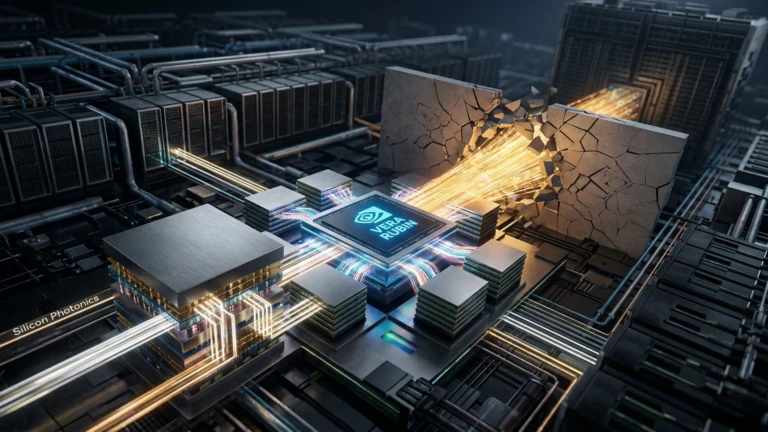
The raw hardware power fueling the AI revolution will be the undisputed cornerstone of GTC 2026. At the event, NVIDIA is expected to officially detail the full production phase of the Vera Rubin platform, the successor to the record-breaking Blackwell architecture. Named after the legendary astrophysicist, this architecture utilizes HBM4 memory technology to reach a staggering memory bandwidth of 22 TB per second—essentially multiplying the capacity of AI factories overnight.
But the real showstopper might be the early breadcrumbs dropped about the Feynman architecture, slated for 2028 on the company’s roadmap. Expected to utilize TSMC’s 1.6nm/1nm-class (A16) manufacturing process and silicon photonics—transferring data using light instead of electricity—this chip family has the potential to redraw the physical boundaries of data centers. It seems our servers are finally reaching spiritual enlightenment.
A Surprise Touch for Consumers: NVIDIA’s ARM-Based N1X Processor
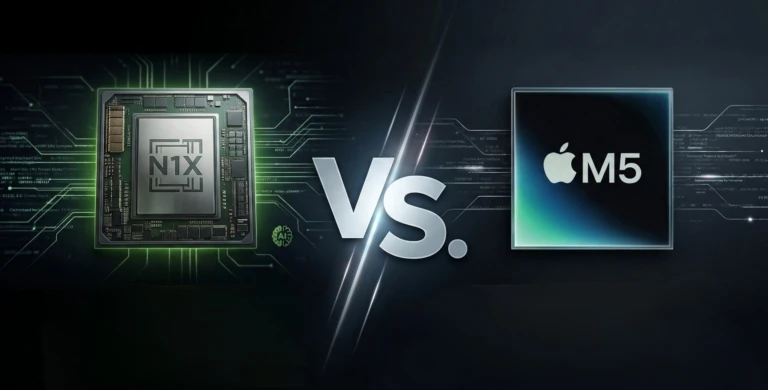
Stepping away from massive server racks and looking at end-users—yes, our everyday laptops—we see NVIDIA quietly rewriting the rules of the game. At GTC 2026, we may witness the first official announcements regarding the ARM-based N1X laptop processors NVIDIA has been developing for a long time.
Designed for the Windows on ARM ecosystem and allegedly hitting the market in the first half of 2026, this chip is directly gunning for the market shares of Intel, AMD, and Qualcomm. Expected to feature a robust integrated NVIDIA graphics unit, the N1X will transform even standard, ultra-thin laptops into high-end AI and gaming machines. It is basically like your sleek office laptop secretly hitting the gym and coming back as a bodybuilder.
From Screens to the Real World: Physical AI and the Universal Robot Brain
This mind-bending leap in chips is also fundamentally altering the nature of software and machines. GTC 2026 will serve as the premier showcase for the era of Physical AI, moving past the age of simple text-generating algorithms into an era where AI makes independent decisions and navigates the physical world alongside us.
One of the brightest stars in this context will be the startup Skild AI and their universal robot brain. Having recently raised 1.4 billion dollars to reach a 14 billion dollar valuation, Skild AI CEO Deepak Pathak will explain this revolutionary technology at the event. Their model adapts to any device without requiring prior, specialized hardware programming—whether the robot is humanoid, wheeled, or a metallic four-legged dog. To understand our chaotic world, these robots are trained using NVIDIA’s Cosmos world foundation models, allowing them to learn physics in digital simulations before they ever stub a metallic toe in the real world.
The Cause-and-Effect Era in Autonomous Driving: Thinking Cars and Alpamayo
The automotive equivalent of these universal brains is triggering a paradigm shift in autonomous driving technologies. Traditional driverless cars have historically struggled with rare edge cases (like a bizarre obstacle on the road or unpredictable pedestrian movements) because they couldn’t think outside their memorized patterns.
To overcome this, NVIDIA is introducing a 10-billion parameter Vision-Language-Action (VLA) model named Alpamayo, giving vehicles human-like reasoning capabilities. Alpamayo’s most revolutionary feature is its ability to establish cause-and-effect relationships. The system does not just turn the steering wheel; it can explain its logic step-by-step (chain-of-thought), outputting reasoning like, I am steering slightly left to avoid the construction cones spilling into the lane. This transparent decision-making mechanism is slated to debut in the 2026 Mercedes-Benz CLA models. Finally, cars that can explain why they swerved, instead of just giving you a mini heart attack!
The Core Solution Making It All Possible: ICMS and Limitless Memory
For robots, thinking cars, and software-writing AI agents to successfully execute complex tasks, they must not forget their previous steps. They require a massive context memory. However, as memory grows, GPU limits bottleneck and systems slow down. Because let’s face it: an AI with amnesia is just an incredibly expensive Magic 8-Ball.
To solve this critical issue connecting hardware, software, and application layers, NVIDIA is announcing a new storage technology called ICMS (Inference Context Memory Storage), powered by BlueField-4. This structure allows AI to store historical data without forgetting, executing operations up to 5 times faster and with 500% higher energy efficiency compared to traditional methods.
Conclusion: The Future is Taking Shape
NVIDIA GTC 2026 will be the official proof that AI has evolved from a simple software application into a fundamental infrastructure running the world, much like electricity or the internet. From the next-generation Rubin architecture and pocket-bound N1X chips to universal robot brains and self-explaining autonomous vehicles, these innovations feed into one another, setting the technological standards for the next decade. All eyes will be on San Jose!

 Veysel Okatan